

The First Week of Indoor Winter
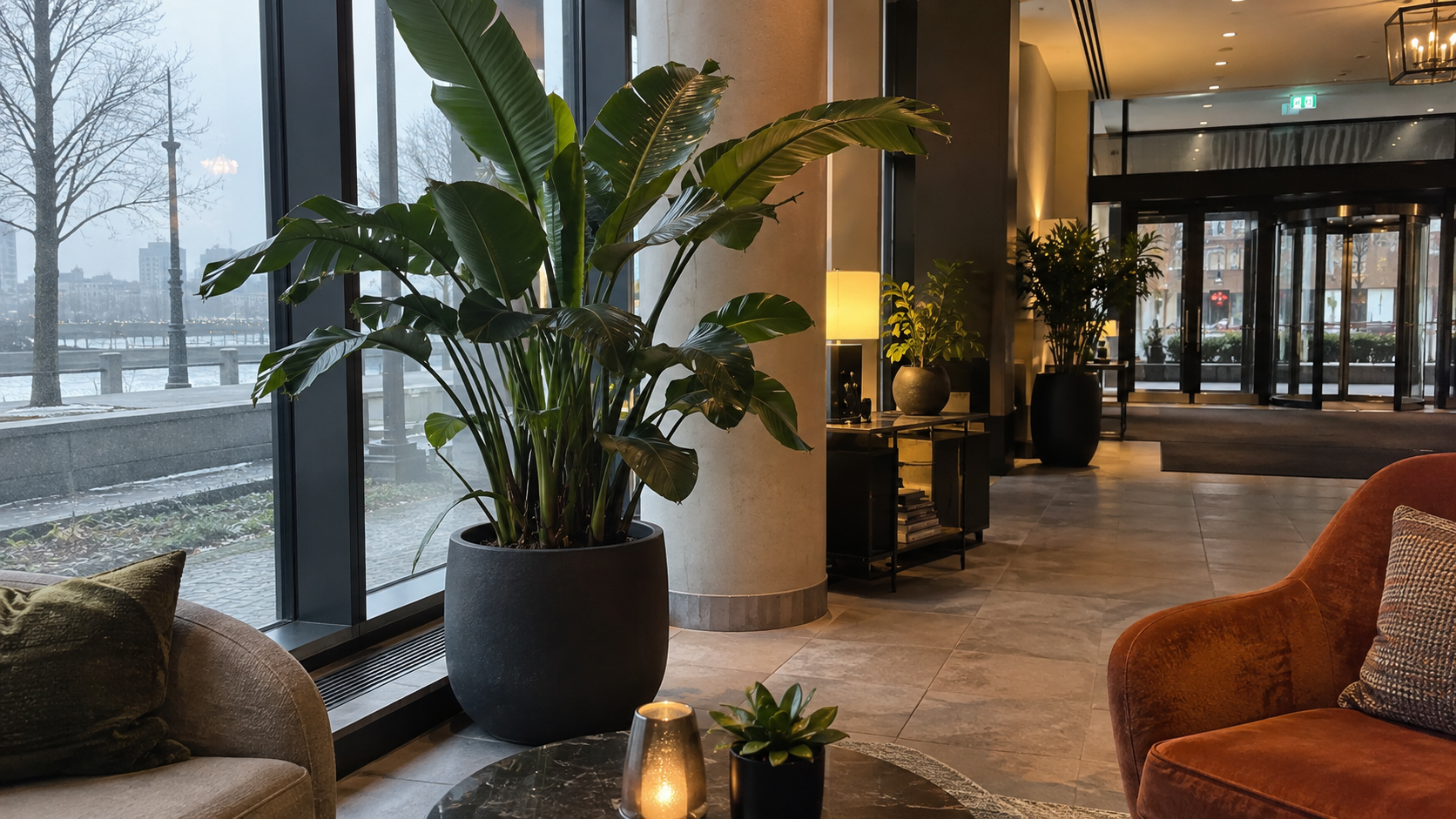
Imagine a London hotel on the first properly cold Monday of autumn. Reception is chilly, so the heating goes on. The doors keep opening for guests, the lights come on before breakfast and the large tropical plant by the window carries on looking magnificent.
For a few days, anyway.
By the following week, a few leaf edges have turned brown. Someone decides the plant must be thirsty and gives it a generous drink. Later, somebody else has the same thought. By Friday, three people have tried to help and the compost is still wet.
This hotel is imaginary, although every part of the problem comes from the sort of thing that appears in real client conversations. Indoor winter rarely arrives as one dramatic event. The building changes, people react, and the plants are left dealing with several different problems at once.
The helpful extra drink
The brown edges look dry, so more water feels like the obvious answer. Unfortunately, the soil is already holding plenty.
The plant is growing more slowly because the days are shorter, which can mean it uses water less quickly. At the same time, warm air from the heating is drying the leaves. The top of the plant looks thirsty while the roots are sitting in damp soil.
This is where a watering schedule starts to lose the argument. Winter care depends on what is happening in the pot and around the leaves, rather than what happened on the same day last week.
The three helpful people are not the problem individually. The plant simply has a very enthusiastic support team and no shared notes.
The door that opens all day
Across the lobby, another plant is having a completely different week. It sits close to the main entrance, where every arriving guest brings in a short blast of cold air.
The position may have been fine through summer. In October, the door opens onto colder weather and stays busy for longer around check-in. The plant is warm while the entrance is closed, chilled when it opens, then warm again. It does this all day without the option of finding a nicer chair.
Moving it a metre may solve the draught and create a problem for luggage, cleaning or the view from reception. This is why plant care in a hotel cannot be separated from how the hotel works. A good position has to suit the plant and the people moving around it.
The corner that still looks bright
The third plant is deeper inside the room. The ceiling lights are on, guests can see perfectly well and nobody thinks of the corner as dark.
Winter daylight tells a different story. The sun is lower, the days are shorter and useful natural light does not reach as far into the building. The room still looks bright to us because our eyes adjust and the electric lighting fills the gap.
We covered this properly in The Room Is Bright. The Plant Disagrees. The practical point in winter is that a position cannot be judged once in summer and assumed to stay the same all year.
Sometimes the plant can move closer to a window. Sometimes the arrangement needs to change, or proper plant lighting is worth adding. Maintenance can respond to weaker light, but it cannot water a dark corner into becoming brighter.
What actually changed?
When several plants start behaving differently after the heating comes on, the sensible response is to walk around the building before reaching for the watering can.
A useful check is quite simple:
• Feel the soil. Is it drying more slowly, staying wet between visits or becoming dry only near a heat source?
• Stand where the plant stands. Is warm air blowing towards the leaves? Does the entrance create a draught? Is the glass much colder than the rest of the room?
• Look at the daylight. How much reaches that exact spot, and for how long? Ceiling lights do not answer this question.
• Ask what has moved. Plants, blinds, furniture and seasonal displays have a habit of changing places without telling the maintenance plan.
• Find out who has watered. A quick drink from several caring people can become a small indoor lake.
None of these details is especially dramatic. Together, they usually explain far more than the brown leaf alone.
Winter care is allowed to change
A summer routine does not need to be defended through December. Watering may need to change from plant to plant. Some positions may need more light, and others may need protection from heat or draughts. Occasionally the best answer is to move a plant, even when everybody liked where it was.
This is the useful part of professional plant maintenance. The visit is a chance to notice what the building is doing now, rather than repeat what worked six months ago.
Large tropical plants are worth this attention. They bring the presence and life that made the scheme exciting in the first place. Winter care should help that idea survive the building's changing conditions, rather than slowly replacing it with something less ambitious.
Our imaginary hotel does not need a heroic rescue. It needs one person to check the soil, notice the radiator, watch the front door and move the plant from the corner that lost its daylight. Ideally, somebody also tells the three helpful waterers that the situation is under control.
If your plants have started behaving differently since the heating came on, book a plant audit. We can work out which version of winter they are living through.