

How to Choose Indoor Plant Pots That Actually Work
A pot has to suit the plant, the room and the person who will care for it. The finish is only one part of that decision.
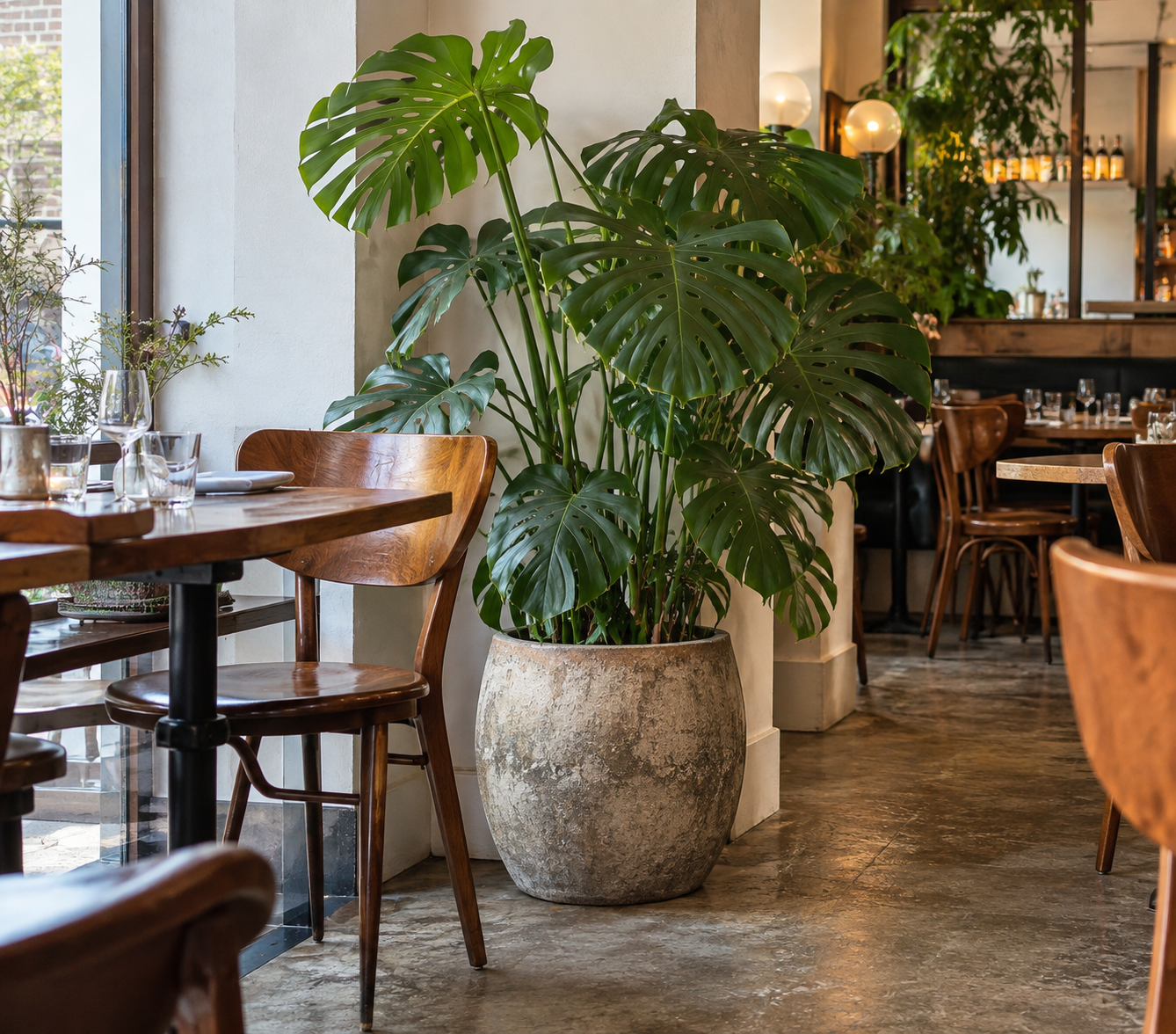
A pot can match the banquette perfectly and still be a difficult place to live.
Colour, shape and finish are usually the first things people discuss. Of course they are: the pot is visible every day, often at eye level, and it needs to belong in the room. But a plant also has to grow inside the arrangement, somebody has to water it, and eventually somebody may have to get it out again. Those details tend to appear later in the conversation, when the beautiful pot has already been ordered.
The roots haven't seen the mood board. They respond to the space and moisture around them. That is why it pays to choose a plant and its pot as one decision, rather than finding a vessel we love and asking a plant to make the best of it.
The pot you see may not be the pot doing the growing
In many indoor displays, the plant grows in an inner pot while a decorative planter provides the visible finish. It is a useful distinction. The inner pot can be sized for the roots and allow excess water to drain. The outer pot can be chosen for the room, provided there is a reliable way to contain and check that water.
A large decorative vessel does not mean a young plant needs to sit in a huge volume of compost. Equally, an attractive outer pot does not solve a cramped growing pot inside it. The two parts have different jobs, and both need to fit.
Some larger schemes are planted directly into purpose-made planters. In that case, the growing space and water management need to be designed as part of the installation. The useful question is how the whole arrangement works, rather than whether the visible pot has a hole in its base.
Choose the growing space around the roots
The height of the leaves is a poor guide to the size of the growing pot. What matters more is the existing rootball, how the plant grows and how long it is expected to stay in that arrangement.
A pot that is much too large can leave a small root system surrounded by compost that stays wet for too long. Roots need air as well as water; constantly damp growing material can damage them. A pot that is too small brings the opposite problem: less room for growth and a smaller store of moisture that may dry out quickly. The right size is a judgement about the plant in front of you, not a standard allowance added to every vessel on the schedule.
This is where a separate decorative pot earns its place. It can give a statement plant the scale the room needs without forcing its roots into an oversized growing pot. There is no prize for filling every centimetre of a beautiful planter with compost.
Follow the water before approving the finish
Water should be able to move through the growing pot, and whoever cares for the plant needs to know where the excess goes. In a commercial interior, it also needs to stay away from floors, furniture and electrical fittings. A liner, inner pot, tray or purpose-built system may provide the answer, depending on the display. None should be treated as an invisible detail once the planter is installed.
Think about the maintenance visit. Can the person caring for the plant check the growing material properly? Can they see or remove water collected below it? If the only way to find out is to lift a heavy plant out of a narrow vessel, the arrangement will become harder to care for than it looked on the drawing.
This matters particularly in a working restaurant, where planters may be shifted and several people may assume someone else has watered them. Our guide to keeping restaurant plants healthy through service looks at that wider routine. A well-chosen pot makes the routine easier to carry out consistently.
Give a large plant a base that belongs to it
A tall tropical plant can bring wonderful presence to a lobby or dining room. Its planter needs the footprint and weight to keep the whole arrangement stable in the place where people actually move around it. A narrow, top-heavy combination may look elegant in an empty photograph and feel less convincing when coats, luggage or chairs pass nearby.
The weight also changes after installation. Pot, plant, growing material and water all count when the display has to be delivered, moved for cleaning or positioned on an upper floor. For a substantial scheme, access and floor loading deserve checking before the order is placed. The question is practical: can this arrangement reach its position, remain secure there and be cared for without turning every visit into a furniture move?
These checks need not make the planting timid. They make it possible to use scale confidently.
Leave a way to get the plant out
Plants grow. Sometimes their roots need attention; sometimes the plant needs replacing for reasons that have nothing to do with the pot. A vessel that narrows sharply at the opening can make removing an established rootball surprisingly difficult. The shape that looks appealing from across the room may create an awkward choice later between harming the roots and damaging the planter.
Before settling on a shape, it helps to imagine the maintenance visit a few years from now. Is the opening wide enough? Can the inner pot be lifted without dismantling the display? Can someone inspect the plant and the water beneath it? A good planter should still make sense after the installation team has left.
Then enjoy choosing the finish
None of this argues for dull pots. A generous statement planter, an unusual texture or exactly the right colour can change how a room feels. Those choices are worth making with care. They become more satisfying when the plant's needs, the watering method and the realities of the building have already narrowed the field to options that will work.
If you are supplying your own vessels, the useful details to share are the inside width and depth, the width of the opening, the material, and where each pot will sit. A catalogue's outside dimensions and a lovely photograph rarely tell the whole story. It also helps to decide who will care for the planting and how they will reach it.
The best pairing looks as though the plant and pot were meant for each other. More importantly, it can keep looking that way after the opening week. If you are planning a commercial planting scheme, we are glad to look at the plants and planters together before either is ordered.