

Is Office Plant Maintenance Actually Worth It?
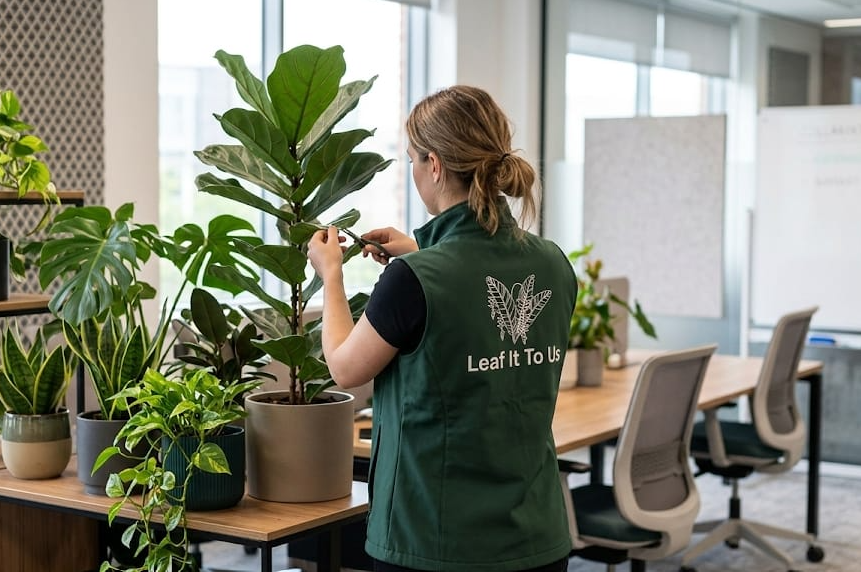
Office plants usually begin with good intentions.
Someone brings in a few plants to make the space feel nicer. A designer includes greenery in the fit-out. Maybe the team gets excited about creating a more welcoming atmosphere after months of staring at white walls and computer screens.
At first, everything looks great.
The plants are healthy. The office feels fresher. Clients comment on the space. People enjoy it.
Then, slowly, reality enters the chat.
One plant starts leaning dramatically towards the nearest window like it’s trying to escape. Another develops mysterious brown patches. Someone overwaters the fiddle leaf fig out of kindness. Someone else forgets the plants exist entirely for two weeks because quarter-end reporting happened.
A few months later, the once carefully styled greenery has quietly become:
dusty
struggling
uneven
slightly depressing
Which raises a fair question:
Is office plant maintenance actually worth paying for?
In many cases, yes. But probably not for the reasons people initially think.
Most office plants don’t suddenly die. they slowly decline
This is usually the important distinction.
Plants in commercial spaces often survive just well enough to avoid immediate disaster, while gradually looking less healthy over time.
Leaves yellow.
Growth becomes uneven.
Dust builds up.
Plants become leggy or sparse.
Watering becomes inconsistent.
The strange thing is that people often stop noticing the decline because it happens gradually.
Until eventually someone walks into the office and realises the greenery intended to make the space feel vibrant now makes it feel slightly neglected instead.
Which is unfortunate, because poorly maintained plants can sometimes create the opposite emotional effect of what was originally intended.
Instead of making a workspace feel:
calm
premium
cared for
welcoming
…the space can begin feeling tired or overlooked.
Why office environments are surprisingly difficult for plants
People often assume indoor plants are low effort because they’re technically indoors and protected from the elements.
In reality, commercial spaces can be quite challenging environments.
Offices tend to have:
inconsistent temperatures
dry air from heating or air conditioning
irregular natural light
long holiday closures
people opening windows unpredictably
furniture constantly moving
nobody clearly responsible for plant care
And unlike homes, plants in offices are often expected to look consistently good all year because they’re part of the experience of the space itself.
A struggling plant in your living room is one thing.
A struggling plant in a reception area quietly communicates something very different.
“Can’t someone in the office just water them?”
Sometimes, yes.
And to be fair, smaller offices with a few resilient plants can absolutely manage things internally for a while.
But what usually happens is that plant care becomes an unofficial side quest assigned to:
whoever likes plants the most
whoever sits closest to them
or whoever happened to remember they existed that week
The challenge is that good plant care is rarely just about watering.
Different plants need different amounts of attention depending on:
light exposure
season
temperature
pot size
drainage
growth cycles
even where they’re positioned in the room
Overwatering is often just as damaging as neglect.
Ironically, many office plants are slowly loved to death rather than ignored entirely.
So what does a maintenance service actually do?
A good maintenance service is usually much more preventative than dramatic.
Most visits involve quiet, ongoing adjustments that stop problems building up over time.
This can include:
watering correctly and consistently
trimming damaged growth
cleaning leaves so plants stay healthy and vibrant
rotating plants for balanced growth
checking drainage and root health
monitoring pests before they spread
replacing struggling plants where necessary
adapting layouts as spaces evolve
In many ways, plant maintenance is less about “keeping plants alive” and more about maintaining the atmosphere and quality of the space itself.
The greenery continues feeling intentional rather than accidental.
Where maintenance tends to make the biggest difference
Not every workspace necessarily needs a full maintenance programme.
But certain environments usually benefit significantly:
coworking spaces
hospitality venues
reception-heavy offices
client-facing businesses
larger commercial spaces
environments where aesthetics and atmosphere matter
In these settings, plants become part of the experience people have when they enter the space.
And like lighting, furniture, cleanliness or scent, that experience quietly shapes perception.
People may not consciously analyse the greenery.
But they absolutely notice how the environment makes them feel.
The best plant maintenance is usually invisible
Interestingly, well-maintained plant spaces rarely draw attention to the maintenance itself.
Nobody walks into a beautifully balanced workspace and says:
“Fantastic hydration schedule on the kentia palms.”
They simply experience the space as:
calmer
fresher
more welcoming
more premium
more alive
And often, that’s the real value.
Healthier plants, yes but mainly, a healthier feeling environment overall.
If your office planting needs more than an informal watering rota, explore Greenarium's office plant styling and maintenance service. The space, the plants and the way it is used should shape what happens next.