

How Do You Choose the Right Plants for a Hotel Lobby?
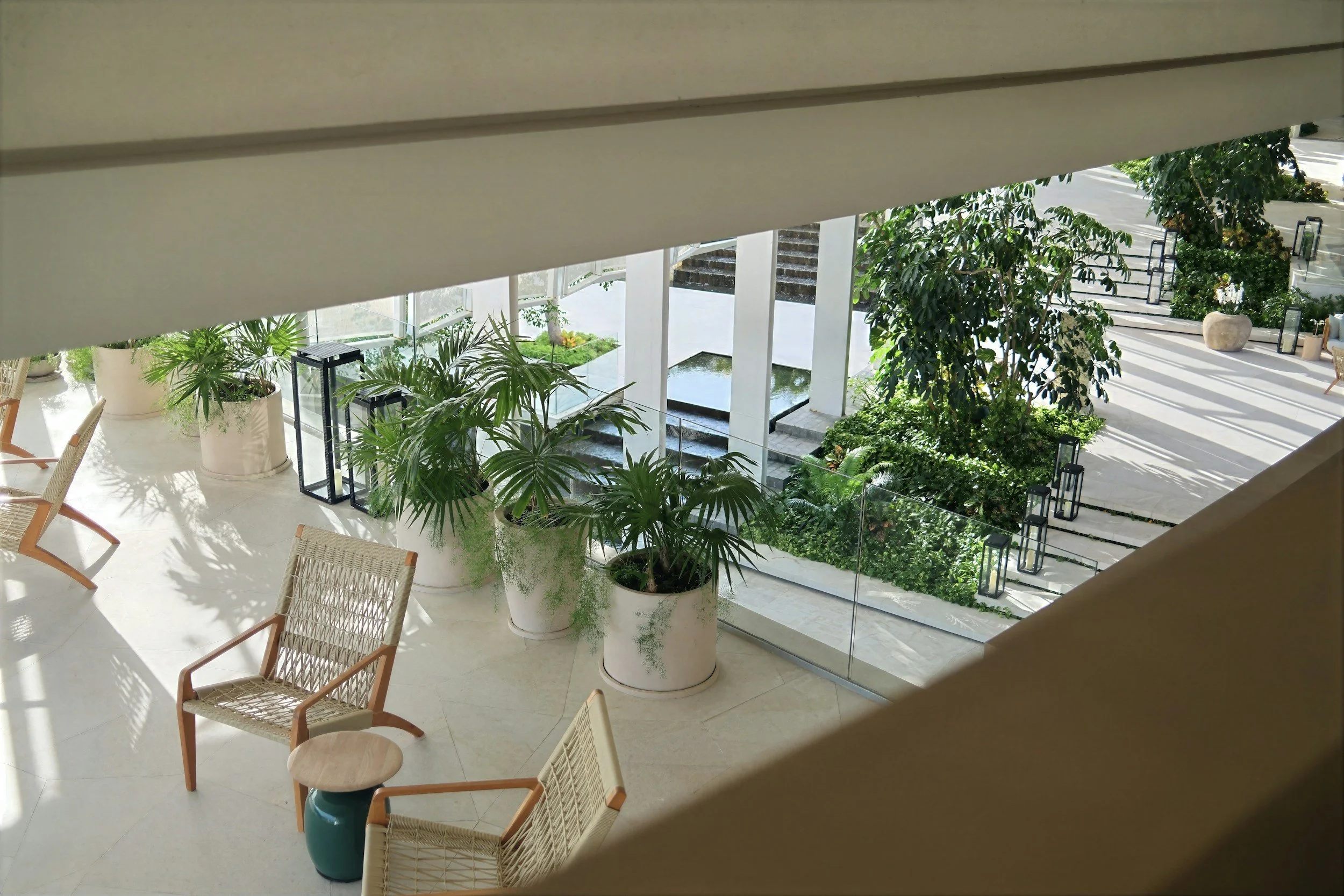
Choosing plants for a hotel lobby comes down to three things before species: the effect you want, what the building supports, and how the room is used.
Most hotel planting starts with a picture of someone else's lobby.
Usually a beautiful one. Often somewhere with rather better light than London manages in February.
It's a reasonable place to start. A photograph says more about the feeling you want than a written brief ever will.
The difficulty comes at the next step, when the picture turns into a shopping list. The question shifts from what did that room make me feel to which plants were in it, and those two questions produce very different lobbies.
Three things shape the result far more than the plant list does:
The effect you want on arrival. What a guest should feel in the first few seconds, which depends entirely on the kind of hotel you run.
What the building can support. Light, ceiling height, floor loading and access decide what is genuinely possible.
How the room behaves when it's busy. The lobby at check-in is the version most guests actually see.
Settle those three and the plants follow fairly easily.
Are there plants that always work in a hotel lobby?
There are plants that are reliably good in lobbies. Any experienced supplier has a short mental list, and Kentia palms have earned their place on it honestly.
The trouble is that everyone has the same list.
Ask any search engine which plants suit a hotel lobby and you get the same handful of names in roughly the same order. It makes no difference whether the room is a townhouse reception in Bloomsbury or a three-hundred-bedroom airport hotel.
Follow it faithfully and you end up with planting that would sit equally well in either. Which is another way of saying it belongs to neither.
A list is a general answer. A lobby is a specific room. The gap between the two is where the interesting decisions live:
How the planting relates to the material palette already in the room.
Whether it reinforces the building's character or works against it.
What it does to the sightline from the front door to the desk.
Your hotel already has a character. Grand, restrained, playful, precise. A guest picks that up within seconds of walking in, and planting is one of the few things that can express it before anyone has spoken to a member of staff.
That seems a waste to spend on the same five plants as everybody else.
What do you want a guest to feel when they arrive?
This is worth settling first, because everything downstream depends on it.
The answer is different for every kind of hotel, which is precisely why a universal plant list struggles. In practice it usually comes down to what you are selling and who is walking through the door:
A townhouse or boutique hotel selling the feeling of arriving somewhere personal tends towards abundance and texture. Fuller, softer, a little informal, closer to a home than a lobby.
A design-led city hotel selling occasion and arrival wants height and silhouette. One specimen with real presence does more here than a row of well-behaved medium plants.
A spa or wellness hotel is after calm rather than drama. Softer forms, layered greens, and considerably more restraint than most people expect.
A business hotel with short stays and early departures needs composure and low fuss. Clean lines, generous scale, nothing that looks like it requires attention.
The same building can want different things in different rooms, too. A hotel might take a bold approach at the entrance and something much calmer in the lounge twenty feet away.
Where a building can carry it, we will almost always push towards the statement option. A single tall tropical specimen with genuine character does something to a room that three medium plants in a row never will.
So the first question is less about plants and more about what kind of arrival you're selling.
What will the building actually support?
Ambition meets the building fairly quickly. Better to find out in week one than in month six.
Natural light is the one that catches people out. A lobby that feels perfectly bright to a person can still be a dim room by a plant's standards, particularly deep into the floorplate away from the glazing.
Light judged by eye on a sunny morning is almost always generous. Measuring it properly changes recommendations more often than anything else we do.
The other constraints are easier to check and just as decisive:
Ceiling height decides whether real drama is available to you at all.
Floor loading matters more than people expect once large specimens in substantial planters are involved, especially on upper floors or above basements.
Access is worth confirming early. A plant that cannot physically get through the doors on a Tuesday morning remains a theoretical proposition.
None of this needs to shrink the ambition, though it will redirect it. Low light rarely rules out a striking lobby. It changes which species can deliver one, and sometimes it means adding discreet lighting so something more interesting becomes possible.
The constraints are information about the room. They are not a verdict on it.
How does the lobby behave when it's busy?
The version of the lobby most guests see is the busy one. It is rarely the version the planting was designed against.
Mid-afternoon check-in is the real test. Luggage everywhere, doors continuously open to whatever London is doing, and a crowd moving through a space that felt serene at nine that morning.
Planting that ignores this fails in predictable ways:
Anything at shoulder height beside a main route collects suitcases.
Anything near a permanently open door spends winter in a draught.
Anything within arm's reach of a sofa eventually becomes somewhere to rest a glass.
Events are worth raising early too. If the lobby doubles as a reception space a few times a month, the planting either needs to move easily or needs to sit where it will never be in the way. Those are different decisions with different costs, and the conversation is much easier before installation than after.
This was the thinking behind the scheme at The Standard Hotel, where the planting had to hold up year-round in a genuinely busy building.
How much planting does a lobby actually need?
Less than most people expect, positioned more carefully than most people bother with.
There's a strong instinct to spread greenery politely around a room so every corner gets a little. It feels thorough. In practice the effect dissolves, nothing becomes a focal point, and the room reads as decorated rather than designed.
One substantial specimen in the right position usually does more than nine pots doing their best around the edges. It tends to cost less across five years as well, since you're maintaining one considered thing rather than nine forgettable ones.
Position repays more thought than quantity. The places that genuinely earn planting:
Whatever the eye meets first on entry. This is the shot you only get once.
Directly behind reception. It appears in the background of every check-in conversation and a fair number of guest photographs.
The corner currently doing nothing. Most lobbies have one, and it is usually the cheapest win available.
Much of the rest of the room does not need it. Leaving space is part of the design rather than an omission.
What does it take to keep a lobby looking that way?
More than most interiors. The planting is on display every hour the hotel is open, and there's no back-of-house version of a reception plant.
A struggling specimen is more noticeable than no specimen at all. Guests may not consciously register why a room feels tired, but they read the signals, and a declining plant in a prominent position says something about how the building is run.
Two things are worth agreeing before anything is installed:
Who looks after the plants between professional visits, and what that actually involves. Expectations differ wildly here, and the gap tends to surface at the worst possible moment.
Whether the company designing the scheme is the one maintaining it. When the same people come back every fortnight for years, they choose differently on day one. They will be the ones standing in front of anything that struggles.
So how should you choose plants for your hotel lobby?
The lobbies that work tend to have been designed backwards, starting from the effect and arriving at the species last.
Decide what a guest should feel on arrival, based on the kind of hotel you actually run.
Establish what the building can support in light, height, loading and access.
Understand how the room behaves at its busiest, and where the eye really falls.
By the time those are settled, the range of plants that will work has usually narrowed to something manageable. The final conversation becomes a pleasant one rather than a gamble.
Guests almost never remember which plants they saw. What stays with them is whether the room felt looked after, and they've generally decided that before they reach the desk.
If you'd like a view on what your hotel or wellness space could support, we're always glad to come and see the room properly, ideally when it's busy.
Frequently asked questions
How do you choose plants for a hotel lobby? Start with the effect you want a guest to feel on arrival, then establish what the building can support in terms of natural light, ceiling height, floor loading and access, then account for how the lobby behaves at its busiest. Species selection comes last, because the same plant can be right in one lobby and wrong in another a mile away.
What size plants work best in a hotel lobby? Larger and fewer generally works better than smaller and more. One substantial, well-positioned specimen creates more impact than several smaller plants spread around the room, and it usually costs less to maintain across several years.
Can you have large tropical plants in a lobby with low natural light? Often yes, though it changes which species will thrive and may mean adding discreet supplementary lighting. Natural light in lobbies is routinely overestimated, so it's worth measuring rather than judging by eye, particularly deep into the floorplate away from the windows.
How much maintenance do hotel lobby plants need? More than most commercial interiors, since the planting is on display whenever the hotel is open. Agree before installation who cares for the plants between professional visits, and whether the company designing the scheme will also be maintaining it.
Does Greenarium supply artificial plants for hotel lobbies? No. Greenarium works only with living plants. Where a spot genuinely can't support anything living, such as a windowless service corridor, the honest answer is preserved moss or straightforward candour about the limitation.