

Living Wall or Potted Plants: Which Is Easier to Maintain?
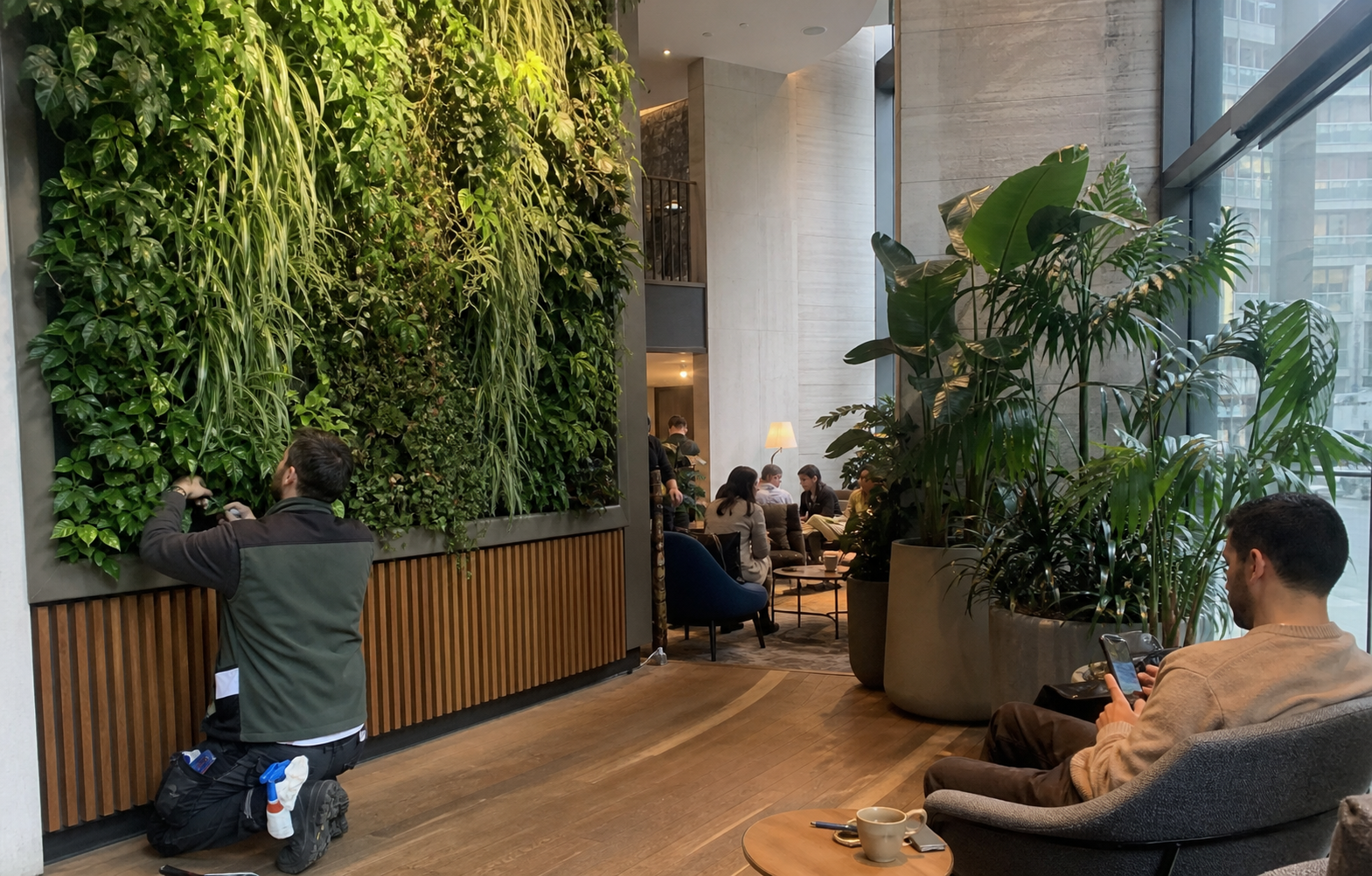
A living wall can make a room feel complete before the furniture has even arrived. It gives a blank surface depth, brings planting into the architecture and creates an effect that a few pots on the floor cannot imitate.
Then the building opens.
Tables move, access routes fill up and somebody discovers that the maintenance hatch sits behind a banquette. The question is no longer which option looked stronger in the visual. It is which one the space can support every week after handover.
Potted plants are usually easier to maintain because each plant can be reached, assessed and moved individually. A well-designed living wall can still be a sensible choice, but it concentrates more of the scheme into one system. Access, irrigation and rapid fault reporting therefore matter much more.
The useful comparison is not simply how often somebody waters either option. It is how each one behaves when the room changes, a plant struggles or a maintenance visit is delayed.
What does maintenance actually involve for each option?
Potted planting spreads the work across separate containers. Each plant has its own position, growing medium and response to the room. During a visit, the technician can check moisture, remove damaged growth, clean leaves, rotate or reposition a plant and spot a problem before it affects the rest of the scheme.
That independence is forgiving. If one planter beside a draughty London entrance begins to decline, the plant can be moved or replaced without disturbing the planting beside the bar. A change to one corner does not automatically become a change to the whole room.
A living wall behaves more like a small piece of building infrastructure. Its plants form one visual surface and usually share irrigation, drainage and access arrangements. Maintenance includes the plants, but it also includes the system supporting them.
That can mean checking:
Water delivery across the wall. An irrigation fault may affect one pocket, one section or a much larger area, depending on the system.
Drainage and water containment. The wall needs to operate without staining finishes or creating trouble for the space below it.
Plant coverage. A gap that would barely register in a group of planters can be conspicuous in a continuous green surface.
Safe access. Upper sections may need specialist equipment or a clear working zone that the venue must be able to provide.
The surrounding environment. Light, heat and airflow can vary from the top of a wall to the bottom, even though the installation reads as one object.
This does not make a living wall an unreasonable maintenance burden. It makes the planning less casual. A wall that has suitable access and a properly considered irrigation system can be maintained efficiently. A wall squeezed into an impressive but unreachable position will keep reminding the operator that the photograph was taken before anybody had to care for it.
Which option is more forgiving when something goes wrong?
Potted plants are generally more forgiving because failure stays local and the scheme can adapt around it.
A restaurant might move a planter to make space for a private event, then discover that its new position works better. A hotel may replace one large plant with two smaller forms when a seating layout changes. These adjustments are possible because the planting is made from individual pieces rather than a fixed surface.
Living walls have less room for improvisation. Their strength is continuity, and continuity is also what makes a visible problem harder to ignore. A failed irrigation line, an unnoticed pump issue or a patch of unsuitable light can affect several plants before the next planned visit.
The response time matters more than the visit frequency alone. A wall may not need somebody standing in front of it every day, but staff need to recognise an unusual sound, a dry section or escaped water and report it promptly. The maintenance provider then needs realistic access to investigate.
This is where the building team becomes part of the system. The receptionist who notices water where it should not be, or the restaurant manager who sees one section changing faster than the rest, can prevent a small issue becoming a large repair. They do not need to become horticulturists. They need a simple route for reporting what they see.
Potted plants also benefit from observant staff, although they offer more time. One dry planter is a problem. A shared system supplying dozens of plants changes the scale of the same oversight.
That difference should shape the maintenance agreement. A living wall needs clear responsibility for irrigation checks, fault response, replacement planting and access. If those points are vague at handover, the wall is relying on goodwill between several parties who may each assume somebody else owns the awkward bit.
How do you choose the easier option for your space?
The easier option is the one that fits the building's access, operations and appetite for fixed infrastructure.
Potted planting suits spaces that change often. Cafés rework tables, hotels host events and offices alter team areas. Individual planters can move with those changes, and the scheme can develop without reopening walls or rethinking drainage.
It also gives a project more control over pace and budget. A few important positions can be planted first, then adjusted once the room is in use. The scheme does not have to be visually timid. Large tropical plants and carefully grouped containers can create real presence while remaining serviceable from floor level.
A living wall earns its place when the vertical surface is central to the design and the project can support it properly. It can bring planting into a narrow reception where floor space is scarce, soften a large atrium wall or create a memorable backdrop in a hospitality space. In those cases, substituting several pots may save infrastructure while losing the reason planting was proposed there in the first place.
Before choosing one, the project team should be able to answer three practical questions:
Can maintenance reach every part safely? The answer should account for the room when occupied, including furniture, guests and operational equipment.
Who responds between visits? Someone on site needs to know what to report and who to contact if the system behaves differently.
What happens when the room changes? A fixed wall needs a longer useful life than the furniture placed in front of it.
There is also a useful middle ground. Vertical planting does not always require a fully integrated living-wall system. Shelving, troughs and grouped planters can use height while preserving individual access. The result is different, but it may suit a venue that wants greenery above floor level without taking on a shared irrigation system.
The decision becomes clearer when maintenance is discussed before the wall is drawn as a finished green rectangle. The technician's route, water supply, drainage, lighting and replacement access belong in the design conversation. Adding them after the interior has been signed off usually turns straightforward requirements into expensive inconveniences.
For many smaller commercial spaces, potted planting will remain the simpler and more flexible choice. For the right wall in the right building, a living wall can justify the extra coordination because it changes the experience of the room in a way separate planters cannot.
Neither option maintains itself. The better one is the scheme whose practical life has been designed with the same care as its opening photograph.
Frequently asked questions
Does a living wall need an irrigation system?
Most substantial living walls use an integrated irrigation system because manually watering a large vertical installation evenly is difficult. The exact arrangement depends on the wall system, planting and building, and should be specified with drainage, monitoring and maintenance access considered together.
How often does a living wall need maintenance?
There is no reliable universal interval. The planting, irrigation system, light, season and expectations of the venue all affect the schedule. The important point is to combine planned horticultural visits with a clear way for site staff to report faults between them.
Can individual plants in a living wall be replaced?
Many living-wall systems allow individual plants or modules to be changed, although access and visual matching affect how straightforward this is. Replacement should also prompt a check of why that section struggled, especially if losses repeat in the same position.
Are potted plants always cheaper to maintain than a living wall?
Not automatically. The number, scale and spread of planters affect service time, while a well-planned wall may concentrate work in one location. Potted planting is usually more flexible and forgiving, but a proper comparison needs the design, access and service expectations of the actual space.