

When Should Hotel Plants Be Revived Rather Than Replaced?
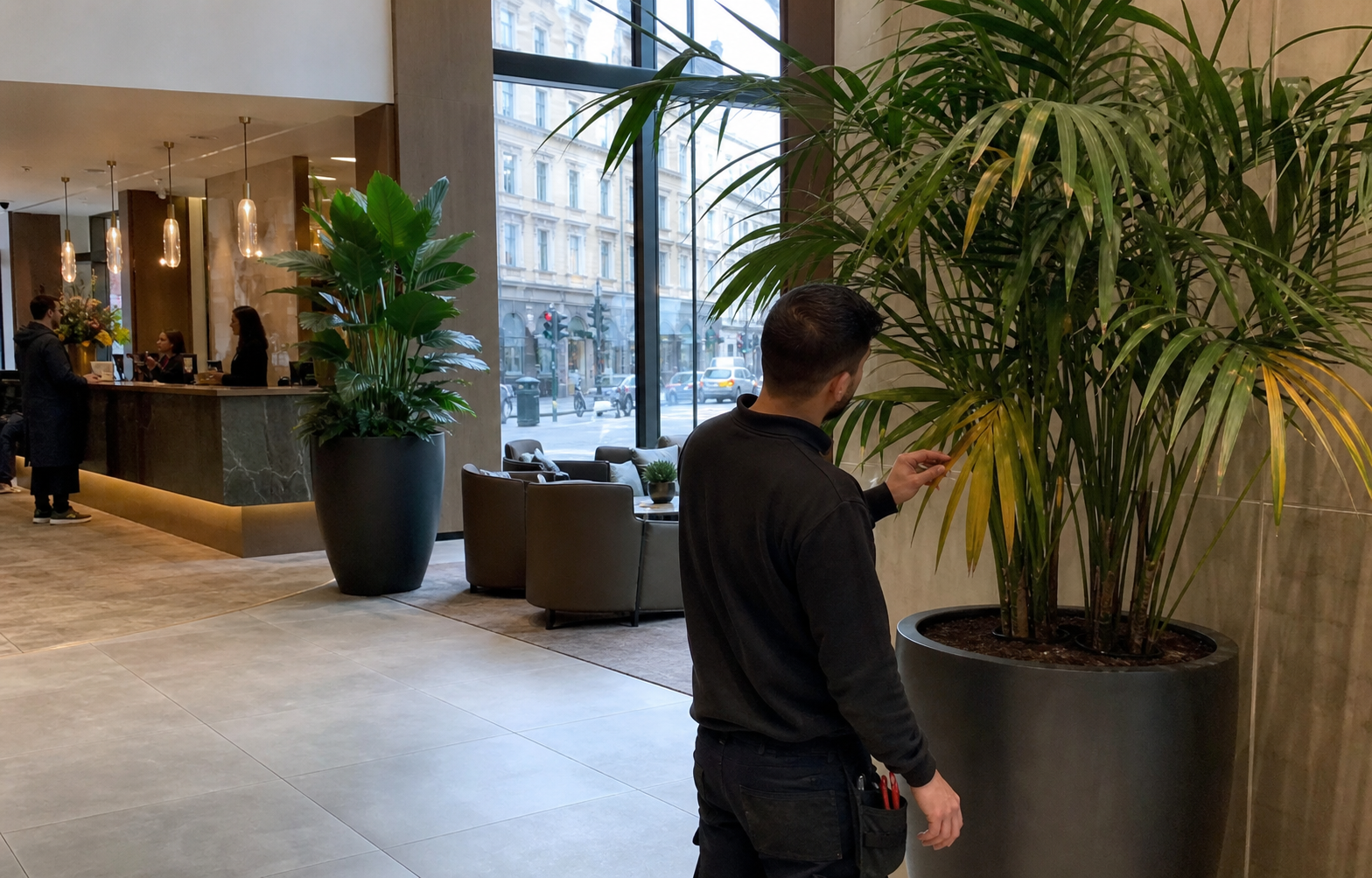
There is a point in the life of a hotel plant when everyone begins having the same conversation around it.
It is still alive. It is also no longer contributing much to the lobby. One side has thinned, a few leaves have been removed and somebody has turned the pot so the better half faces the guests. From reception, it looks passable. From the lift, the negotiation is more obvious.
This is when “Can it be saved?” becomes a practical question rather than a sentimental one.
A hotel plant is worth reviving when the cause of decline can be corrected and the plant still has a credible future in the scheme. Replacement is the more responsible choice when recovery is unlikely, the plant can no longer present well in a guest area, or the same position will keep causing the same failure.
The difficult part is deciding which situation you are actually looking at.
Why do hotel plants decline in the first place?
Decline is often blamed on watering because watering is the part everybody can see. In a hotel, the real cause can sit elsewhere in the room.
A plant chosen beside a bright window may spend most of the year behind a blind. A specimen near reception may receive a cold draught every time the entrance opens. Another gets moved for an event, then returns to a position with different light because the original spot is now occupied by a rope barrier or a Christmas tree.
The plant has not become difficult. Its circumstances have changed.
That distinction matters because a replacement placed into the same circumstances may follow exactly the same route. For a few weeks the new foliage makes the problem appear solved. Then the familiar signs return, and replacement starts to look like a maintenance strategy when it is really a repeating installation.
Before deciding what happens to the plant, it helps to look at the whole position:
Has the available light changed? Blinds, seasonal daylight, nearby displays and changes to lighting schedules can all alter a position that once worked.
Has the room changed around it? Air conditioning, heaters, open doors, cleaning routines and event layouts can place new pressure on an established plant.
Has care been consistent? Several well-meaning people adding a little water is not the same as one person monitoring the growing medium and the plant’s response.
Is the container still working for the plant? The visible pot may hide an internal arrangement that needs attention, better drainage management or more growing room.
Is there a pest or disease issue? This needs identifying before the plant is moved through the hotel or placed beside healthy planting.
The point of diagnosis is not to keep every plant indefinitely. It is to stop treating every brown edge as the same problem.
Hotels make this especially important because public areas are rarely static. A lobby that was assessed on a calm Tuesday morning behaves differently at check-in, during a winter draught or while the doors are open for a large delivery. The version of the room that matters is the one the plant experiences repeatedly.
When is a struggling hotel plant worth reviving?
Revival makes sense when there is enough healthy plant left to recover and something meaningful can be changed.
That change might be modest: a better position, an adjusted care routine, relief from a direct draught or time in a more suitable recovery space. It may involve more work, such as reviewing the roots, growing medium, container or supplementary light. The exact response depends on the plant and must follow a proper horticultural assessment.
The hotel also needs to decide where recovery should happen. A plant can be biologically capable of improving while being visually unsuitable for the main arrival for several months. Those are two different judgements.
For a back-of-house office, gradual regrowth may be perfectly acceptable. In a five-star lobby, a sparse statement plant draws attention for the wrong reason. Moving it away from the main guest route can give it a genuine chance without asking the interior to carry the recovery process.
This is one advantage of managing planting as a collection rather than a set of unrelated pots. A hotel with suitable secondary positions or an agreed off-site recovery route has more options. A plant can be moved deliberately, monitored and returned only if it regains the form the original design requires.
There should still be a limit. “We are trying to save it” can become an indefinite category, especially when nobody has agreed what improvement would look like or when it should be reviewed.
A useful recovery decision has three parts:
A credible diagnosis. There is an identifiable reason for the decline, rather than a vague hope that more attention will help.
A change in conditions. The light, position, care or growing environment can actually be improved.
A review point. The team knows when the plant will be assessed again and what would justify returning it to a guest-facing position.
This is where nurturing plants differs from keeping them at any cost. Good care is active and observant. It can include accepting that a particular plant has reached the end of its useful life in that particular scheme.
When is replacing a hotel plant the more responsible choice?
Replacement is appropriate when the plant is unlikely to recover well, creates a hygiene or safety concern, or can no longer fulfil the role it has in the room.
A large plant near reception is doing more than occupying a pot. It may balance the desk, screen a service view or soften the route between the entrance and the lifts. If its form has collapsed beyond a realistic recovery, the design has already changed. Keeping it in place because it remains technically alive does not preserve the original scheme.
There are also moments when speed matters. A hotel preparing for a launch, inspection or important event may need the main public areas to look resolved. The declining plant can still be assessed for recovery elsewhere, but the guest space should not become its waiting room.
The responsible question then moves to the replacement itself.
If the previous plant declined because the position was fundamentally wrong, supplying the same thing again is difficult to defend. The replacement may need a different plant character, a different scale, a revised container or support from a properly specified grow light. In a position that cannot be made suitable for living plants, preserved moss, another design feature or no planting at all is more honest than starting another cycle. Greenarium does not use artificial plants.
This is also why replacement terms in a maintenance agreement deserve more attention than they usually receive. Unlimited replacement can sound reassuring, yet it may remove the incentive to understand repeated loss. A more useful arrangement records what failed, where it failed and what changed before the next plant arrived.
Over time, those records reveal the difference between normal change in a living scheme and a position that was never properly resolved.
A well-maintained hotel will still replace plants. Living things age, suffer damage and sometimes respond unpredictably despite sensible care. The aim is not a perfect survival rate. It is a scheme in which replacement follows judgement rather than routine.
Guests should never need to notice any of this. They see a lobby that feels cared for, a restaurant where the plants belong and corridors without a tired specimen being kept alive out of administrative habit.
Behind that ease is a more thoughtful decision: revive what has a future, replace what does not, and learn enough from both that the same corner is not asking the same question again next season.
Frequently asked questions
How long should a hotel plant be given to recover?
There is no useful universal timeframe because recovery depends on the plant, the cause of decline and the growing conditions. The maintenance team should set a review point after diagnosis and describe what improvement they expect to see. A plant should not remain indefinitely in a main guest area while that decision is unresolved.
Can a hotel plant recover away from guests?
Yes, if the plant is suitable for recovery and the alternative position provides the conditions and care it needs. Moving it to a darker back corridor simply makes the problem less visible. The recovery location should be chosen for the plant, not only for operational convenience.
Should plant replacement be included in a hotel maintenance contract?
The agreement should state who pays for replacements, what circumstances are covered and who approves changes to the scheme. It should also distinguish an isolated loss from repeated failure in one position. The latter usually calls for a review of the location, specification or care plan before another plant is installed.