

How Do You Choose a Commercial Plant Styling Company in London?
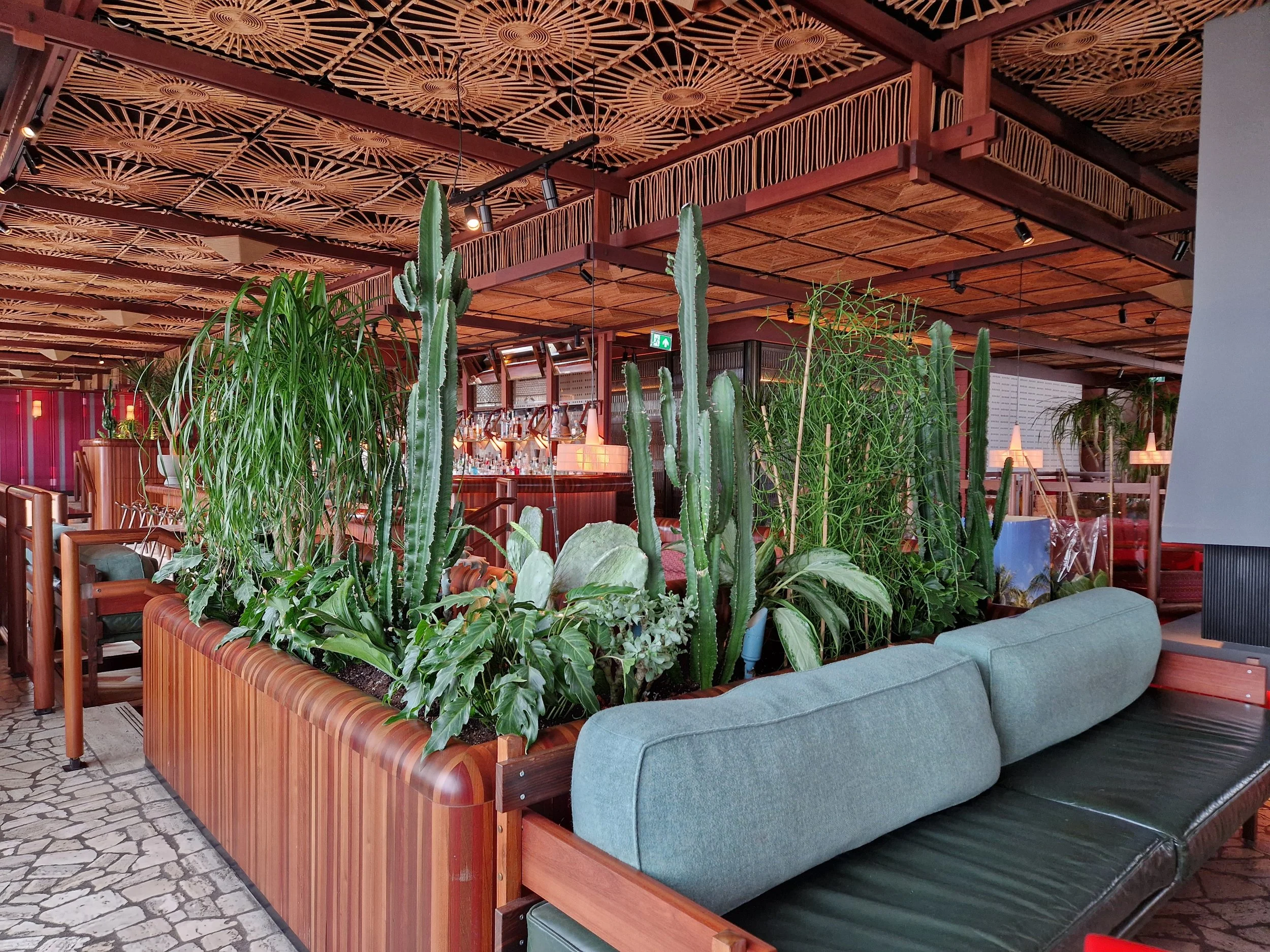
Decimo Restaurant, The Standard Hotel, London
Search for a commercial plant styling company in London and, before long, the websites begin to blur into one.
Beautiful photography. Confident copy. Large leaves arranged beside expensive furniture. And, somewhere on the page, a reassuring declaration of passion for plants.
Which, to be fair, is probably true.
It is just not especially easy to verify from a homepage.
To choose well, look past the photography and judge a company on six things: who actually selects the plants, who manages your account after installation, what its maintenance service genuinely involves, whether it can show you installations that have aged, whether it works with living or artificial plants, and how the budget divides between the plants and the pots.
Each of those is worth asking about directly. Here is what to listen for in the answers, even if you were not considering Greenarium.
Do they understand plants, or mainly understand interiors?
Good commercial planting requires both design and horticulture, but it is the horticultural knowledge that keeps a space alive once installation day has passed.
A visually strong designer can transform a space through scale, proportion, texture and composition. They may immediately understand that a large architectural plant would soften a hard reception area, or that several smaller plants would work better than one statement piece in a busy café.
But plants are not static materials.
The same specimen that looks perfect on installation day may respond very differently once it has spent several weeks beside an air-conditioning vent, beneath a skylight or in the path of harsh afternoon sun.
That is why it is worth asking who actually selects the plants. Is the choice being made by someone with horticultural knowledge, or primarily by a designer selecting from a supplier catalogue? Does that person visit the space and assess the light, temperature and airflow, or are they working from photographs and floor plans?
Both approaches can create a beautiful installation.
The difference often becomes clear eighteen months later, when one space still feels healthy and balanced while another appears to be quietly surrendering near the lift.
Who will actually manage your account?
Ask for the name of the person who will look after your plants week to week. Company size tells you about capacity, not about who is paying attention to your account.
Larger companies can be impressive. They often have substantial portfolios, polished processes and teams capable of delivering complex projects at scale. For a large site with a significant budget, that infrastructure can be extremely valuable.
But company size does not automatically tell you who will be paying attention to your plants each week.
The person leading the presentation may not be the person overseeing the installation. The person overseeing the installation may not be the person carrying out the maintenance. Over time, the account may move between teams until responsibility becomes slightly unclear.
That does not mean larger providers deliver poor service. It simply means you should ask how the relationship will work in practice.
Useful questions include:
Who will be responsible for our account day to day? You want to understand whether there is a named person who knows the history of the space, rather than a rotating list of technicians following generic notes.
How experienced are they? Plant care involves judgement. Someone needs to notice when a plant is merely adjusting to a new environment and when it is beginning a determined campaign against its current location.
Who reviews the overall design over time? A space changes. Furniture moves, teams grow and areas begin serving different purposes. Good commercial planting should respond to that rather than remaining frozen at the point of installation.
A company that is confident in its team should be able to answer these questions clearly, and probably with an actual name.
At Greenarium, Ursula remains closely involved in client work herself. Partly because she loves it, and partly because she is not entirely convinced anyone else notices an unhappy fern quite as quickly.
Is maintenance included, and what does "maintenance" actually mean?
Confirm whether ongoing maintenance is included and what it covers. Good maintenance means genuinely caring for plants, diagnosing why one is struggling and adjusting its care, rather than simply replacing anything that begins to decline.
Many commercial planting installations look excellent in the handover photographs. That is the easy part. The more useful question is what they look like six months later.
Some companies specialise primarily in design and installation, leaving the client to arrange ongoing care separately. This can work, but it creates a gap between the original design intention and the people responsible for keeping it alive.
The maintenance team may never have seen the brief. They may not know why a particular plant was chosen, what role it plays in the wider arrangement or why that rather demanding planter was placed in a difficult corner in the first place.
Even when maintenance is included, it is worth understanding what that service involves.
Does it mean:
watering and leaving;
cleaning, pruning and monitoring plant health;
adjusting care through the seasons;
checking for pests and drainage problems;
moving plants when the environment is not working;
or simply replacing anything that begins to decline?
Replacement is sometimes necessary. Plants are living organisms, and not every specimen adapts successfully. But there is an important difference between replacing a plant when needed and treating every struggling plant like a faulty lightbulb.
A thoughtful maintenance provider should first ask why the plant is unhappy. Is it receiving too much water? Is the heating drying it out? Has the light changed? Would another position suit it better?
A space filled with genuinely thriving plants feels different from one maintained through a revolving door of replacements, even when the photographs look broadly similar. A company that both designs and maintains the planting also has a strong reason to choose well from the beginning, because its work continues living in your space long after installation day.
Can they show you real spaces after the installation?
Ask to see photographs of completed client sites taken months after installation, not only computer-generated renders. Renders show the intention. Aged photographs show whether the planting actually works.
Computer-generated visuals are useful. They help clients understand scale, placement and the overall feeling of a proposal before anything is installed.
They are also wonderfully cooperative.
Rendered plants never wilt, grow unevenly, lean towards windows or object to the air conditioning. That is part of their charm.
But renders cannot show you whether the planting survives real life. Better still than a single portfolio shot, ask for examples of spaces similar to your own.
We are always glad to point to examples, such as our Heatherwick Studio project.
An office presents different challenges from a hotel lobby. A hotel lobby behaves differently from a restaurant. A café with a bright shopfront window may have strong daylight but also fluctuating temperatures, open doors and customers brushing past the leaves throughout the day.
Look beyond whether the installation appears attractive.
Ask yourself:
Do the plants still look healthy?
Does the planting feel integrated into the architecture?
Is there enough visual impact without overwhelming the room?
Does the style suit the type of business?
Can the company explain how the design responded to the particular space?
A strong portfolio should demonstrate more than one successful installation day. It should show that the idea continued working once real life began.
Do they work with real plants, artificial plants or both?
Ask this directly, because the answer reveals a company's philosophy. Greenarium works only with living plants, though we recognise that artificial or preserved planting can be the sensible choice in a windowless corridor or a genuinely inaccessible spot.
Artificial plants have become remarkably convincing. Some are so realistic that people instinctively give them a cautious poke before deciding whether watering is required.
They can also solve genuine practical problems. A completely windowless corridor, an inaccessible shelf or a short-term installation may not be capable of supporting living plants sensibly. In those cases, artificial greenery or preserved planting can provide visual softness without creating an impossible maintenance problem.
At Greenarium, however, we only work with living plants.
This is not because we fail to appreciate the design quality of a well-made artificial installation. Some look excellent. It is because we believe plants are living organisms first and design elements second.
Our purpose is not simply to place green shapes around a room. It is to bring living nature into everyday environments.
A real plant grows, changes, responds to light and occasionally becomes slightly dramatic about its surroundings. It contributes more than colour and form. Its presence reminds us that the room is shared with something alive.
Artificial plants can imitate the visual language of nature. They cannot actually be nature.
That distinction may or may not matter to every client, but it is useful to know where your provider stands before choosing them.
Is most of the budget going towards the plants or the pots?
Ask for a quotation that separates the cost of the plants from the cost of the containers. Bespoke vessels can quietly consume a large share of a commercial planting budget, so it is worth checking the split reflects what you actually want.
A good container matters. The right pot helps establish proportion, connect the planting to the interior and make the whole arrangement feel deliberate rather than recently delivered from a garden centre.
And yes, a beautiful handmade vessel can be extremely persuasive. We have fallen for plenty ourselves.
But commercial containers can also represent a large proportion of the total project cost, particularly when they are bespoke, imported or specified as statement design pieces. There is nothing inherently wrong with this. The issue is whether the allocation reflects what you actually want from the project.
If the purpose is to create a strong sculptural installation, investing heavily in vessels may make complete sense. If the goal is to bring generous living greenery into a workplace on a controlled budget, spending most of the money on containers may leave surprisingly little for the plants themselves.
Ask for enough detail in the quotation to understand:
what you are paying for the plants;
what you are paying for the containers;
whether delivery and installation are separate;
whether irrigation systems are included;
and what ongoing maintenance will cost.
A transparent provider should be comfortable explaining where the investment goes and why. The best answer is not always "more plants, cheaper pots." It is a considered balance between healthy planting, suitable containers and the needs of the space.
Do they understand the kind of space you operate?
A good provider adapts its approach to your sector rather than repeating a house style. Offices, hotels, restaurants and wellness spaces all ask something different of their planting.
In an office, plants may be used to soften hard architecture, support wellbeing, break up open-plan areas and create a more comfortable working environment for people spending most of the day there.
In a hotel or restaurant, the emphasis may be on atmosphere, identity and first impressions. The planting needs to contribute to the story of the space while also surviving busy service, changing temperatures and frequent contact with guests.
In a wellness setting, the planting may need to feel quieter and more restorative. The right design may involve restraint rather than abundance, with natural textures and gentle forms supporting a sense of calm.
Even within the same sector, two spaces can require completely different approaches. A creative studio may want planting that feels expressive and slightly unruly. A legal office may prefer something architectural, calm and precise. A candlelit restaurant and a bright daytime café are both hospitality spaces, but their planting should not necessarily look remotely alike.
Ask the company what kinds of environments it works in most often and how its approach changes between them. Previous experience in your sector is useful, but the more important sign is whether they are genuinely curious about your particular space.
A good provider should ask about:
how the building is used;
who spends time there;
which areas matter most;
how the space should feel;
and what practical restrictions need to be considered.
Plants have moods.
Apparently, so do rooms.
What should you ask before choosing a commercial plant company?
The photography matters, but it should not be the only thing guiding the decision.
Ask who will select the plants and what horticultural expertise informs that choice. Find out who will manage the account once the project is complete. Understand whether maintenance involves genuinely caring for plants or mainly replacing them when they decline. Ask to see real installations that have had time to live. Clarify whether the company uses living or artificial planting, and why. Look closely at where the budget is going. And make sure the provider understands the kind of environment you are trying to create, rather than simply repeating a style that worked somewhere else.
Any company confident in its work should welcome those questions. Ideally, without flinching.
Frequently asked questions
How do you choose a commercial plant styling company in London? Judge a company on six things rather than its photography: who selects the plants and whether they have horticultural expertise, who manages your account week to week, what its maintenance service genuinely involves, whether it can show installations that have aged well, whether it uses living or artificial plants, and how the quotation divides between plants and containers. A confident provider will answer all six clearly.
Do commercial plant companies provide ongoing maintenance or just installation? It varies, so always confirm before signing. Some companies design and install only, leaving you to arrange care separately. Others, including Greenarium, both design and maintain the planting, which keeps the people who chose the plants responsible for keeping them alive.
Are real or artificial plants better for offices? Living plants deliver the wellbeing benefits most offices are seeking, since a real plant grows, responds to light and genuinely brings nature into the room. Artificial or preserved planting can be a practical choice in windowless or inaccessible spaces. Greenarium works only with living plants.
How much does commercial plant styling cost in London? Cost depends on the size of the space, the number and type of plants, the containers specified, whether irrigation is installed and whether ongoing maintenance is included. Ask for a quotation that separates these elements, so you can see where the investment is going rather than accepting a single figure.
Does Greenarium work outside London? Greenarium is London-based and works across the city and surrounding areas. If your space sits just outside London, it is worth asking, since coverage often extends further than a postcode alone would suggest.